Astronomy begins with observation, evidence, and questions.

Watch the sky, track what changes, and use light patterns to understand stars, constellations, and how scientists build reliable knowledge of the universe.

  • Observe stars over multiple nights
  • Map constellation shapes and positions
  • Compare brightness, color, and starlight
  • Identify repeating sky patterns
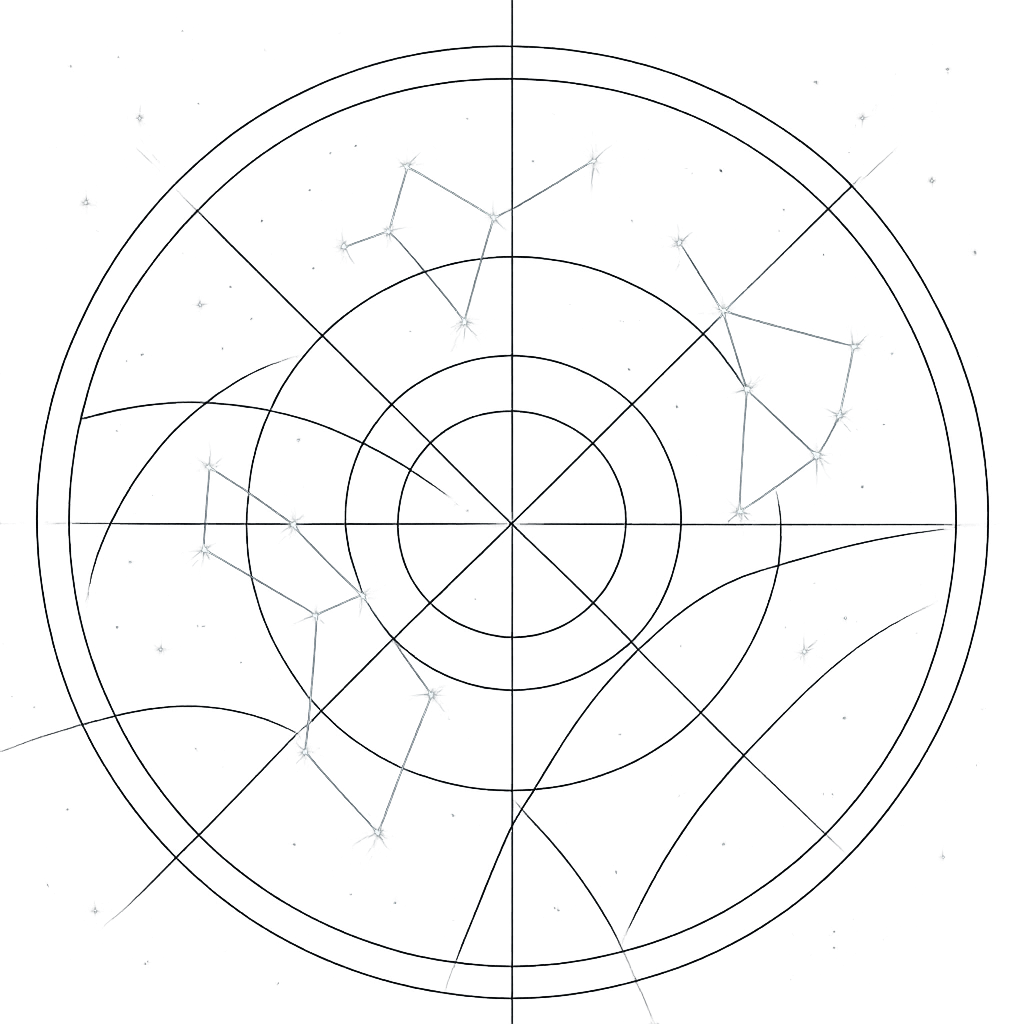
Scientific star-map style astronomy illustration with constellation lines, coordinate circles, telescope-view geometry, and labeled light paths on a dark night-sky background
Star-map diagram: constellations, coordinate circles, and light-path references used for careful sky observation.

Astronomy Q&A

Common Questions From Curious Sky Watchers

Short answers to help you start investigating big ideas in astronomy. This independent, free educational project encourages careful observation and scientific curiosity.

Why do stars seem to twinkle?
Twinkling happens because Earth’s atmosphere bends starlight in slightly changing ways. As air moves, the light appears to shift in brightness and position.
What is a constellation?
A constellation is a recognized pattern area in the sky. The stars may look connected from Earth, but they are usually very far apart in space.
What do telescopes actually help us see?
Telescopes collect more light than our eyes, so faint objects become clearer. They can also magnify details, helping us study craters, planets, and distant galaxies.
Why does the sky change through day, night, and seasons?
Earth rotates every day, which changes which part of space faces us. Over a year, Earth orbits the Sun, so nighttime views shift with the seasons.
How far away are planets, stars, and galaxies?
Solar system distances are often measured in kilometers or astronomical units. For stars and galaxies, astronomers use light-years because the distances are extremely large.
How do astronomers learn from light?
By splitting light into spectra, astronomers detect elements, temperature, speed, and motion. Different wavelengths—like radio, visible, and X-ray—reveal different space processes.

Still wondering something? Send your question through our Contact page and we may include it in the next learner Q&A update.