
Universe Introduction

From drifting nebulae to vast galaxies, the universe reveals how matter, distance, and time shape cosmic history.

Explore clear scientific ideas that help you picture scale across light-years while connecting each observation to real, student-friendly astronomy learning.

  • Galaxies
  • Nebulae
  • Scale
  • Time
  • Distance

Independent, non-commercial educational content for students, families, and teachers.
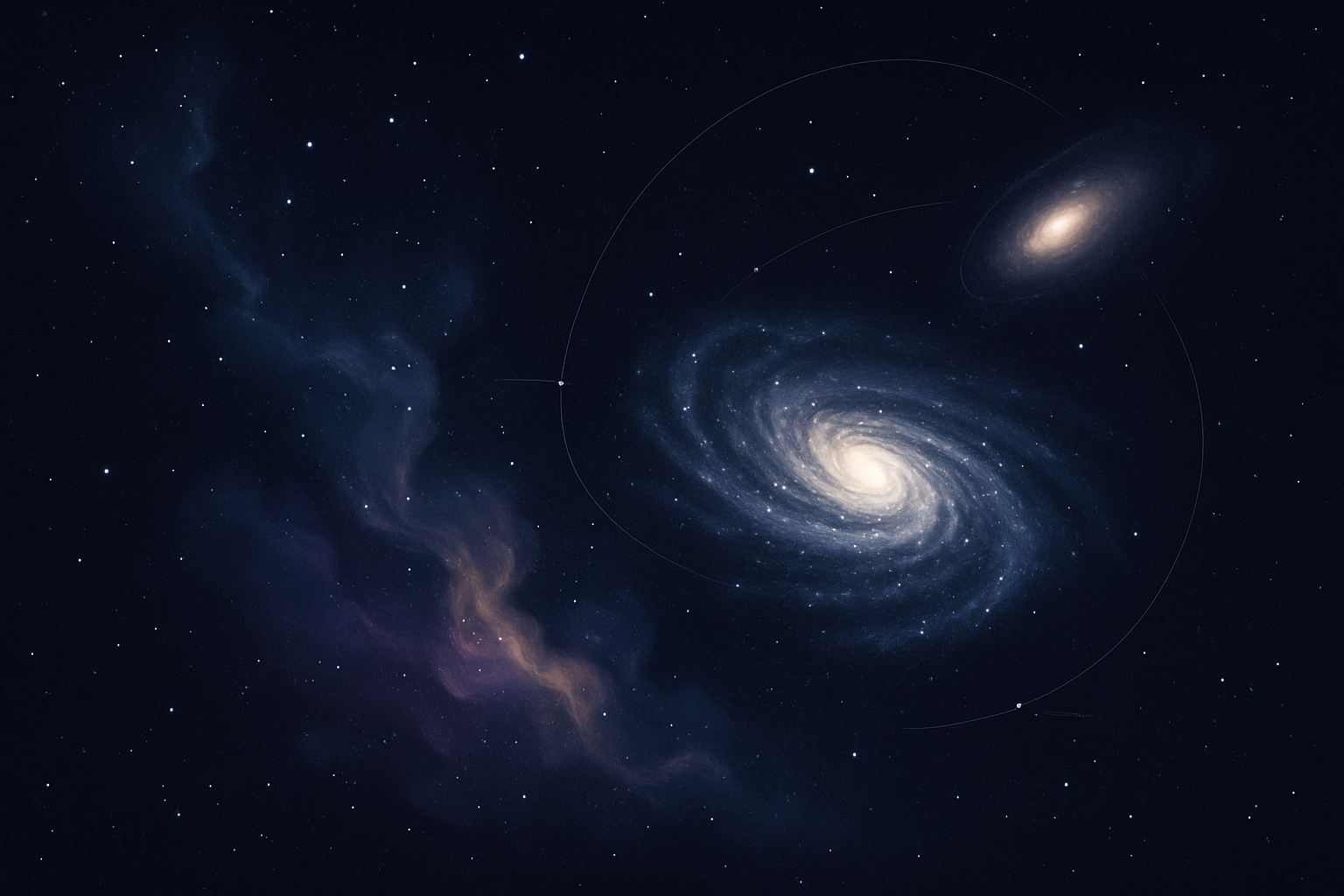
Educational deep-space illustration showing spiral and elliptical galaxies, glowing nebula clouds, and visual distance cues across star fields

Universe Foundations

Universe scale concepts

Scan these core ideas to build clear mental models for astronomy, distance, and how we study the cosmos.

Stars

Stars are luminous spheres of hot gas that generate light and heat through internal energy processes.

Galaxies

A galaxy is a vast system where stars, gas, dust, and dark matter are bound together by gravity.

Light-years

A light-year is a distance unit that describes how far light travels in one year through space.

Expansion

Cosmic expansion means space itself stretches over time, increasing separation between distant galaxies.

Observation

Observation uses telescopes and sensors to collect light and signals, turning distant events into evidence.