
Rocky
Inner Planets
Mercury, Venus, Earth, and Mars are smaller, denser worlds with short orbital paths around the Sun.
Solar System Foundations
Start with one structured view, then compare how worlds move, differ, and connect across our solar system.
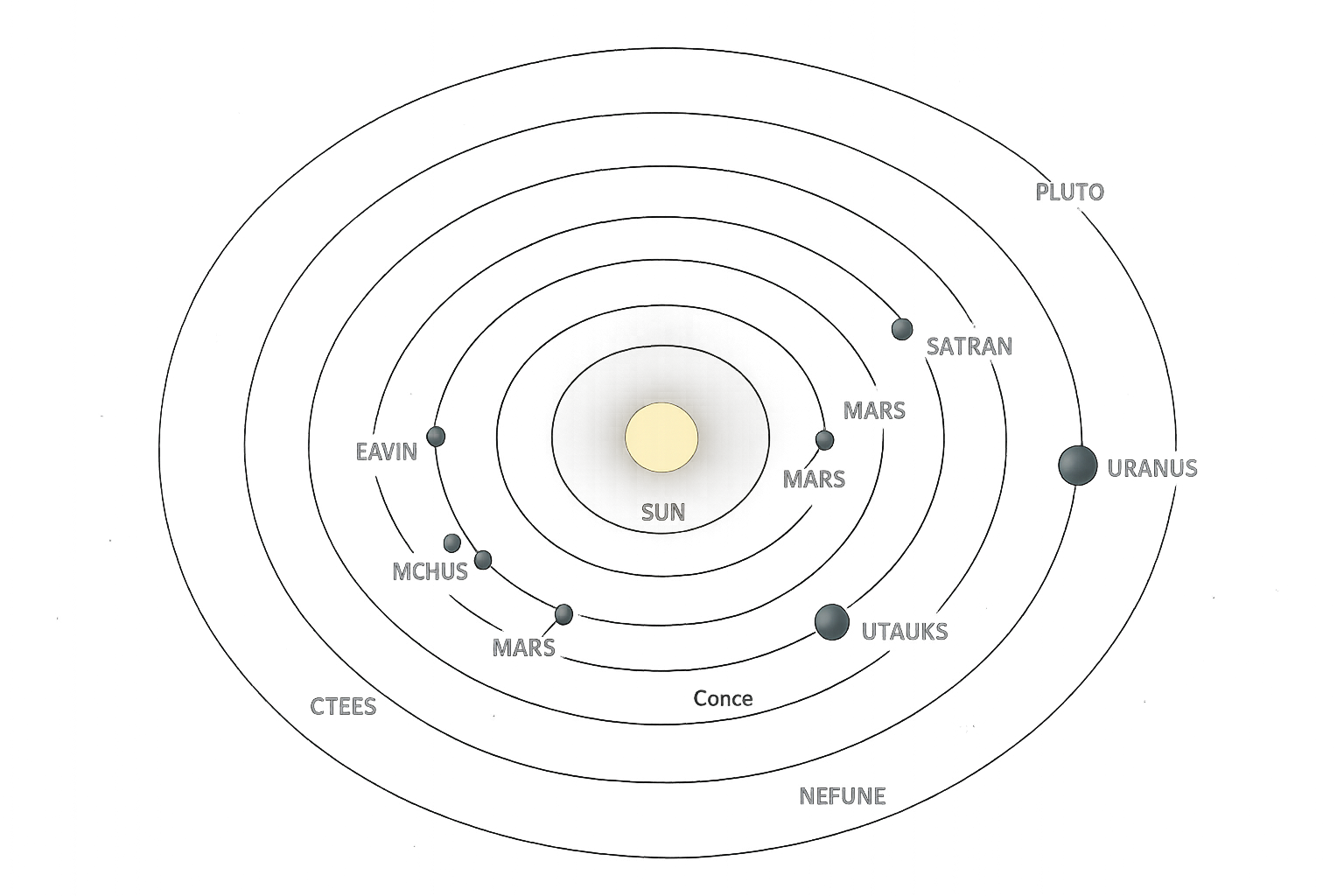
Sun
Energy source and gravitational center.
Planets
Eight major worlds with distinct properties.
Moons
Natural satellites orbiting many planets.
Dwarf Worlds
Smaller bodies like Pluto and Ceres.
Orbits
Paths that reveal motion, period, and distance.
Solar System Comparison Lab
Use these exhibit-style cards to compare world types quickly, then test your understanding in missions and observations.
Mercury, Venus, Earth, and Mars are smaller, denser worlds with short orbital paths around the Sun.
Jupiter to Neptune are much larger, colder, and mostly made of gases or volatile ices.
Moons orbit planets and range from icy ocean worlds to volcanic bodies with active geology.
Pluto-like objects are round and orbit the Sun but have not cleared nearby orbital space.
Closer worlds complete years faster, while distant worlds travel longer, wider orbits around the Sun.
Independent, free, and non-commercial educational content for student curiosity and scientific learning.